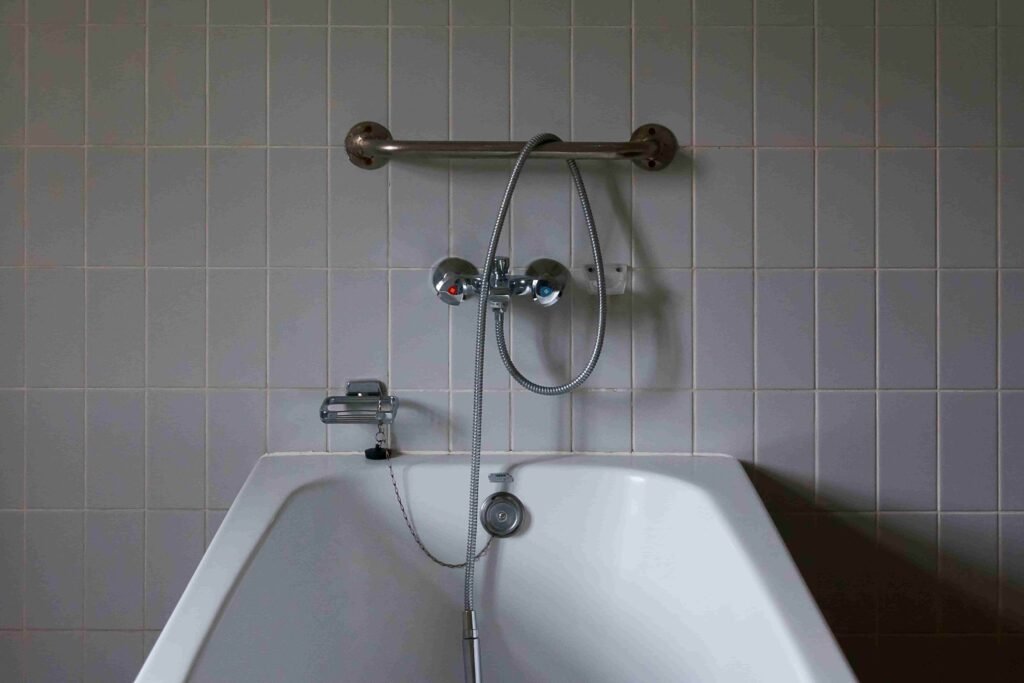
September brings Fall Prevention Awareness Week. We’ve written about why home safety modifications matter, the importance of being proactive and how to talk about it as a family, and this article describes how. Room by room, fix by fix. A printable checklist is available at the bottom of the page.
Do this with the person who lives there, not to them. They know the house better than anyone, and, when the resident is pointing out what already annoys them, the walkthrough will be much more productive.
Three things that make Arizona homes different
Generic fall prevention checklists are written for houses with carpet, basements, and gentle daylight. Arizona homes are not those.
- Tile is unforgiving. Most Valley homes run tile or hard flooring wall to wall. It’s beautiful, cool, and easy to clean, but it turns a stumble that would bruise on carpet into something more severe. With hard flooring, preventing the fall altogether is more important than softening the landing, because there is no soft landing.
- Sunlight is extreme. Stepping from a bright patio into a dark hallway is a daily event in Arizona, and aging eyes take longer to adjust. Dimness isn’t the only lighting problem to solve: glare and contrast are crucial as well.
- Much of our summers are spent indoors. Months of triple-digit heat mean less walking, and less walking can cause a dip in strength and balance by fall (right when pleasant weather invites everyone to be more active again). The house should be prepared for this before fall rolls around.
Start with the bathroom
Falls in the bathroom were about two and a half times more likely to occur than in the living room, and about 80% of at-home falls happen in the bathroom. If you only tackle one room, tackle this one. Consider:
- Grab bars at the toilet and both inside and outside the shower. Anchor them into studs or with proper wall anchors. Towel bars and suction-cup bars are not grab bars, as they aren’t meant to hold people.
- Non-skid surface inside the shower or tub. Strips, a treated surface, or a quality mat that actually grips.
- A bath mat audit. Ensure it’s rubber-backed and low-profile. Otherwise, replace it.
- A nightlight that’s always on, so there’s no need to find a switch in the middle of the night.
- A handheld shower head and a shower chair make washing a seated task.
- A raised toilet seat if the current one requires a deep knee bend to reach.
- A wipe-it-now rule for water on tile.
Next, the bedroom
- Light the path from bed to bathroom end to end. Plug-in motion-sensor nightlights are the best sub-$20 purchase on this list.
- A lamp or switch reachable from the bed, so no one has to cross a dark room to reach a light.
- Phone charger within arm’s reach, not across the room.
- Check the bed height. Sitting on the edge, the resident’s feet should rest flat with knees near level.
- Clear the floor: no cords, laundry piles, or low furniture.
- Footwear by the bed with backs and grip. Backless slippers on tile can still be slippery.
- Consider a bed rail if steadying is needed when standing.
Then, the kitchen
- Move everyday items into the hip-to-shoulder zone. The goal is a kitchen where nothing daily requires a climb or a deep bend.
- Retire the chair ladder. If reaching is required, consider a sturdy step stool with a handle, but rearranging beats reaching.
- Wipe spills immediately. The tile rule again, and the kitchen is where it earns its keep.
- Rug check at the sink: rubber-backed and flat, or gone.
- Task lighting over counters and the stove. Shadows hide edges and spills.
- Heavy pans stored low but not on the floor. Between knee and waist is the safe zone for weight.
Then, living areas and hallways
- The rug audit, house-wide: every throw rug either gets rubber backing and lies dead flat, or it retires. This is the least popular fix on the list, but it can prevent the most stumbles.
- Cords out of walkways, rerouted along walls, not taped across paths.
- Widen the lanes. Arrange furniture so the routes between the most-used rooms are wide and straight (walker-width if a walker is in the picture).
- Favor firm chairs with armrests for the daily sitting spots. Deep, soft sofas are hard to exit.
- Light the route between bedroom, bathroom, kitchen, and favorite chair.
- Keep floors clear as a habit, not an event.
Arizona-specific entryways, patios and garages
- The sliding-door track: the raised lip of a sliding door can be a sneaky tripping hazard. Mark it with high-contrast tape or add a small threshold ramp.
- Threshold transitions at every exterior door. Level them or mark them.
- A stable stepping path across gravel and paver yards, because loose gravel is not a walking surface.
- Hoses coiled and off the path, always.
- Manage the glare zones: a shade sail, screen, or awning where bright-to-dark transitions happen at doorways.
- After a monsoon, rinse or sweep the patio. The fine dust film left behind turns slick underfoot.
- Pool decks get non-slip treatment. The same logic as the shower, at scale.
- In the garage, ensure there’s a clear walking lane to the car door, good overhead light, and no oil sheen on the path.
If the list feels long, here's what to fix first
If you’re doing this in stages, do the bathroom first, lighting and the nighttime path second, floors third (rugs, cords, clutter), equipment last. Most items above cost less than fifty dollars and take an afternoon to install.
For the bigger-ticket fixes, like professional grab bar installation, non-skid flooring treatment, ramps, and rails, cost shouldn’t be the reason they don’t happen. The Bloom Concierge Home Care Foundation, a separate 501(c)(3), awards micro-grants from $100 to $2,500 for exactly this kind of home safety equipment, and nominations take minutes.
If you’d rather have a professional set of eyes on the whole house, our Certified Senior Home Safety Specialists® offer a complimentary 240-point home safety review with prioritized recommendations at no charge and with no obligation.
FAQ
Which room should we start with?
The bathroom. Water, hard surfaces and daily transfers make it the highest-risk room per square foot, and its fixes (e.g., grab bars, non-skid surfaces, a nightlight) are among the most effective.
What are the cheapest fall prevention measures with the biggest impact?
Motion-sensor nightlights on the bed-to-bathroom route, securing or removing throw rugs, clearing cords from walkways and non-skid strips in the shower are usually under $25.
Do grab bars need professional installation?
They need to anchor into studs or use proper wall anchors rated for body weight. They should never be suction-mounted bars. If drilling into tile isn’t your comfort zone, professional installation is inexpensive, and it’s among the equipment and installation costs the Bloom Concierge Home Care Foundation’s micro-grants can cover.
What if my parent doesn't want changes made to the house?
Start with the walkthrough together, let their knowledge of the home lead and frame fixes as protecting the routines they care about. We’ve written a fuller guide to that conversation and to why acting early preserves choices.
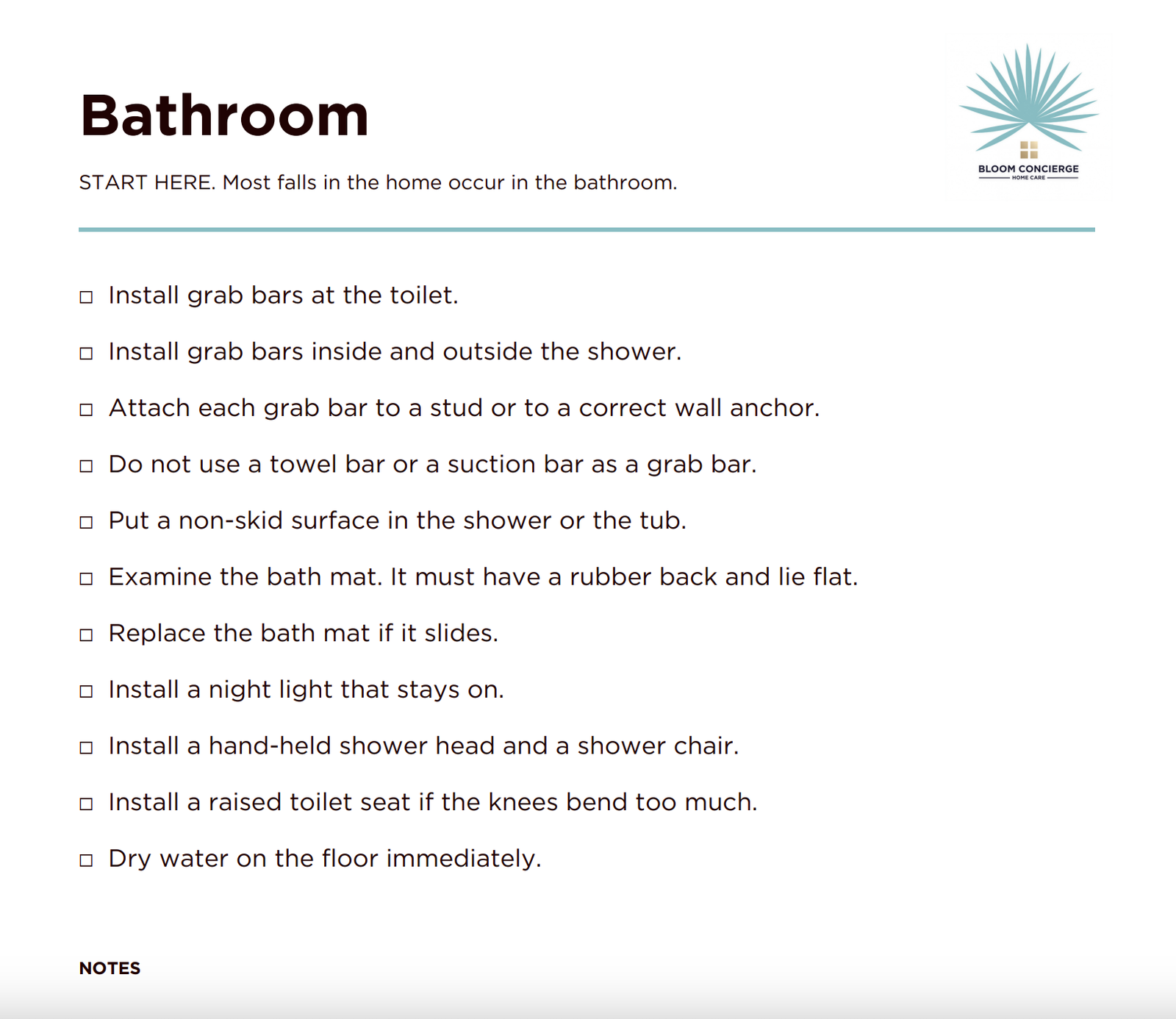
Want this list in your hand instead of on your screen? Download the room-by-room checklist below.
Prefer a trained set of eyes assess your home? With our complimentary home safety assessments, there's no catch. No hidden charges, no obligations.
or schedule a conversation at your convenience. Our team is ready to support you whenever you need us.