
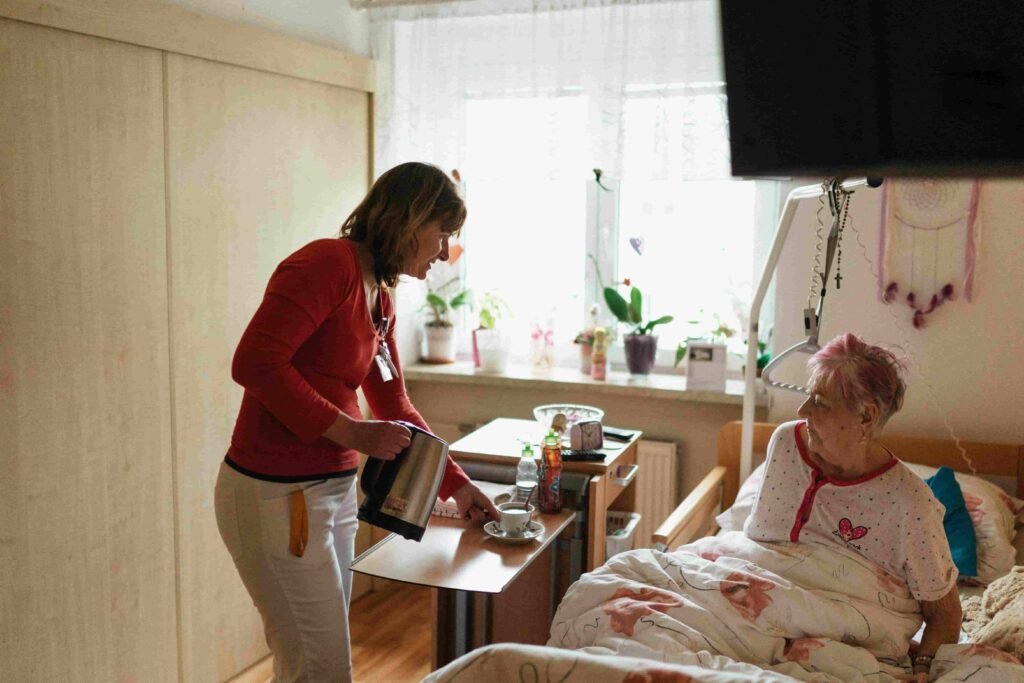
The first three days at home post-hospital discharge are where recovery either finds its footing or starts to wobble. It includes prescription facilitation, visits from home health and home care, home safety hazard removal and careful planning.
Without the structure the hospital provides, the little things start to feel much bigger. But this guide walks you through what to ask the hospital, how to plan around your loved one’s needs and what your options for support are.
5 questions to ask before you leave the hospital
Discharge paperwork is written for completeness (and often compliance) rather than clarity. Before you leave the room, ask the nurse, discharge planner or case manager for plain-language answers to these questions:
- What are the warning signs, and who do I call? Ask specifically: what should prompt a call to the doctor’s office, and what should prompt a 911 call. Ask for an after-hours number as well.
- What exactly changed about their medications? A recent study found that “older adults with a higher medication burden were significantly more likely to experience [medication] errors after discharge.” Ask for the full list instead of stopping at the new prescription alone. Know which drugs to stop, which doses changed and which to keep taking.
- What are the restrictions, in daily-life terms? “Don’t lift the cat”, “don’t carry the laundry basket” and “don’t push the trash can to the curb” each make more sense than “no lifting over ten pounds”.
- Which appointments exist, and which do I need to make? Write down dates and phone numbers, and determine who is responsible for booking each one.
- Is home health ordered, and, if so, when is the first visit? If a nurse or therapist is coming, you want the agency’s name and the expected first-visit window before you leave.
Write the answers down in one place and take a photo. Share it with those who need it, and save it to your favorites album if you think it could become buried in a group chat.
Day one post-discharge
The goals for the first day are small: get home safely, get settled and get medications in order.
- Handle the pharmacy before you leave the hospital, not after. Call the pharmacy from the room and ask them to start the new prescriptions.
- Walk the route they’ll actually walk. From the car to the door, then to the bathroom, then to the bed or the chair where they’ll spend most of the day. If there’s a rug, cord or threshold in the way, move it now rather than planning to. Our room-by-room guide covers the specifics on what to look out for in the rest of the house.
- Set up everything they need in one place. On one table within arm’s reach of where they’ll be sitting, have their phone, charger, water, glasses, remote, tissues, call list and anything else they might need.
- Sort medications before dinner. Lay out the full list, compare it to what’s already in the cabinet and pull anything that was stopped. A weekly organizer is safer than three days of guessing. Family members and non-medical caregivers can set up reminders and prompts, but administering medication is clinical work. If your parent can’t manage their own doses reliably, talk to a physician or home health nurse.
When help disappears
Day one usually has company, but day two is often when the shape of recovery becomes clear.
- Watch what’s ordinary. Can they get up from a chair without help? Can they use the bathroom without assistance? Can they open the pill bottle, or stand long enough to make toast? Nobody tests these in a hospital room, but they can decide everything at home.
- Make follow-up calls. Book the appointments that weren’t scheduled at discharge, and ask the doctor’s office to note if there’s any transportation assistance needed.
- Expect low energy. Coming home after a hospital stay is tiring in a way that can surprise people. A quiet, low-expectation second day is a good second day.
- Eat something real. Appetites can often be poor after a hospital stay, and the fridge stock is usually past its shelf life. Simple, familiar foods eaten more often in smaller amounts tend to work better than a big dinner nobody touches.
Decide what’s needed for the next two weeks post-discharge
By the third day, you usually have an idea of capabilities, hazards and the upcoming schedule. Plan with that rather than drifting into a fourth day of improvisation.
Sit down with your parent and name what’s actually required:
- Who is in the house? When? Map the next two weeks honestly, including the hours when nobody is there.
- What has to happen daily? Meals, medication reminders, mobility help and the hygiene routine.
- What has to happen weekly? Groceries, laundry, follow-up appointments and pharmacy runs.
- What’s the one thing most likely to go wrong? Usually it’s nights, or the gap between someone leaving for work and someone else arriving.
If the honest answer is that the plan depends on you taking two weeks off work, it isn’t a plan yet. You’ll need to create one for yourself too, and our guide to balancing work and caregiving can help.
Who does what: home health, home care and family
Recovery at home usually involves more than one kind of help, and families can lose valuable time sorting out what they need.
Home health is the medical side. It’s ordered by a physician and delivered by licensed clinicians. It often includes services like nursing visits, wound care and physical or occupational therapy. Visits are short and task-specific, and it ends when clinical goals are met.
Non-medical home care post-discharge provides assistance with everyday needs, including meals, transportation to follow-ups, help with bathing and dressing, medication reminders, laundry and companionship through a long afternoon. It offers someone who can be there when family can’t. It’s arranged directly by the family, and no physician order is required. There is no finish line with home care, either. It becomes an integral part of many care plans, even when a full recovery is made.
Family handles decisions, advocacy and relationship maintenance. Often, families spend their limited energy on logistics and have nothing left for the parts that matter most.
The full comparison of home care and home health, including how each is typically paid for, is here: Home Care vs. Home Health in Arizona.
Short-term help is normal
Some people assume home care is a permanent arrangement, so they exhaust themselves powering through a recovery that only needed three weeks of support.
But short-term post-discharge care is one of the most common ways families start. It can look like a few weeks of mornings, or coverage during work hours. Some families stop there, but others keep a lighter version in the mix.
Because recovery is unpredictable, the useful question to ask any agency is how quickly they can start and how easily the schedule can change once it’s started. Local ownership matters here because decisions don’t have to travel through a franchise office.
If you’re interested in home care but aren’t sure where to start, explore our guide to choosing an agency here. It explores how to prepare, what to ask and the hallmark traits of any agency worth your time.
If equipment is the barrier to returning home
If equipment is the barrier to a safe discharge, the Bloom Concierge Home Care Foundation can help. The foundation is a separate 501(c)(3) entity that provides micro-grants for ramps, grab bars, non-skid flooring, bed rails and other equipment that promotes safe, independent aging. Anyone can submit a nomination, including professionals with no prior relationship to Bloom.
FAQ
How soon after discharge should I organize home care?
Often within a day or two, and same-day starts are sometimes possible. Non-medical home care doesn’t require a physician’s order, so the timeline depends on scheduling and a short intake conversation rather than on paperwork moving between offices.
Do we need home care if home health is already coming?
Often, yes, because they cover different things. A home health nurse may visit three times per week for 45 minutes to handle the clinical plan. But home care covers the meals, rides, help getting to the bathroom and hours in between.
What should we have ready before the first day home from the hospital?
The full medication list, follow-up appointment dates, a clear path from the door to the bathroom and bed, food that’s easy to eat and a written call list (with the doctor’s after-hours number).
Can a caregiver give my father his medications?
Non-medical caregivers provide reminders and prompts, not administration. If someone needs doses given to them, ask the physician or the home health agency how it should be handled.
Discharges rarely happen when it’s convenient. But care can often begin within the week.
or schedule a conversation at your convenience. Our team is here to support you whenever you’re ready.