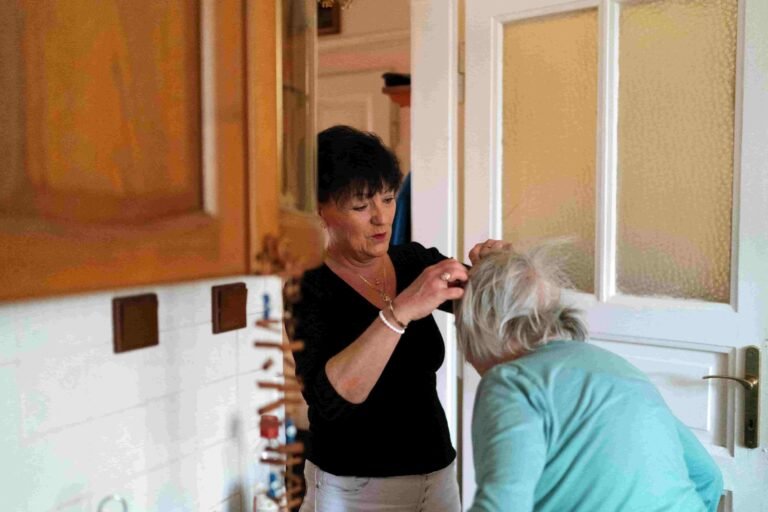

When considering support for your loved one, balancing their needs, budget, and preferences can feel like an impossible task. AARP reports that 75% of older adults want to stay in their own homes. If your loved one wants to age in place, in-home care offers a customizable solution combining cognitive, physical, and social support that promotes their well-being, respects their preferences, and honors their sense of independence.
4 benefits of aging in place
1. Customizable solutions
The nature of in-home care makes it the most customizable option. The main goal of any trusted home care agency should be to supplement a client’s existing lifestyle, allowing them to engage in activities that help them live their most enjoyable and comfortable lives. Your loved one will consistently see a caregiver whose personality and experience align with their needs and preferences. This allows the caregiver to identify trends against a baseline, making it easier to identify potential concerns before they escalate.
In-home care is scalable and preference-oriented. You control the ability to add or remove visits. Similarly, home care is the only option that provides the ability to “test drive” caregivers until you find someone your loved one looks forward to seeing. In-home care operates under the assumption that every individual is unique, offering a high level of flexibility.
2. Strengthens relationships
Conversations about care with your loved one are sometimes met with resistance, so it’s crucial to approach the conversation with a perspective rooted in seeking to understand their concerns and preferences. This conversation and decision should remove tension from relationships, allowing you to enjoy your time together. Choosing the right care plan can be a matter of trial and error, but the right agency will work as a resource for your family and help you find what’s right for everyone.
3. Preserves normalcy and improves cognition
Many older adults resist help because they fear moving into a role of someone who needs to be provided for. Home care can be the compromise that keeps their dignity intact. By supplementing the current rhythm of their home, this solution allows your loved one to hold onto the independence that being a homemaker comes with. They’re able to stay close to their community and maintain ownership of what they worked hard to call their own.
The important of connection to community should not be overlooked. The WHO estimates about a quarter of older people experience social isolation and loneliness, which has detrimental effects on mental and physical health. Socialization reduces stress, which in turn improves their well-being. Preserving their access to their preferred styles of socialization also helps maintain familiarity, which benefits them cognitively by reducing stress and confusion. By keeping your loved one living at home and helping them regulate their routine, in-home care slows cognitive decline by reinforcing what’s familiar.
4. Increases protection from illness and injury
Nearly half of all older adults are looking to make changes so their home is better equipped to accommodate future physical limitations, meaning they are already planning to stay in place for as long as possible. Combining home modifications with an exercise plan (often created with assistance from a caregiver) is the most common recipe for reducing fall risk.
In terms of illness prevention, choosing an agency that partners your loved one with a single caregiver reduces the number of unnecessary interactions with potentially compromised individuals drastically. Their living space is not shared with unknown individuals, nor is it managed by a large number of staff members.
The senior population overwhelmingly prefers to age in place. The benefits of personalized in-home care promote a safe, healthy, and fulfilling lifestyle, enhancing the care recipient’s current routine while also maintaining familiarity. If you’re considering in-home care for your loved one, read more about what these services can include on our website, or feel free to contact us. Even if you end up choosing another solution, our main goal is helping Arizona families choose the care that is right for them.
FAQ
What should I look for in a home care agency?
Strong communication, professionalism, reviews, and alignment with your needs are all crucial factors to take into consideration when choosing a home care agency. Questions to ask yourself include, “Would I trust this person to care for my loved one?”, “Are they knowledgeable about the industry?”, and “Do they care about what’s best for my family?”.
What is the difference between home care, home health care, assisted living, and nursing homes?
In short, home care assists with non-medical tasks and promotes comfort (e.g., transportation, bathing assistance). Home health care offers the same services as home care, but adds medical care (e.g., intravenous therapy, catheter maintenance). Assisted living facilities are co-living communities that typically have medical staff on site. Nursing homes provide around-the-clock, in-house medical care.
I'm a caregiver for my loved one, but I'm exhausted. What can I do?
You may be experiencing caregiver burnout, which is the state of mental, emotional, and physical deterioration of oneself directly resulting from caregiving. In-home care, or respite care, can be treated as a break for family caregivers to allow them to address their own needs and responsibilities. Help is available online and in person via support groups, one-on-one therapy, and medical Telehealth appointments. Psychologytoday.com can help you locate support near you.
I'm not sure if my loved one needs care or not. What are the signs?
Signs your aging loved one needs care can include cognitive decline, daily living struggles, or a fall.