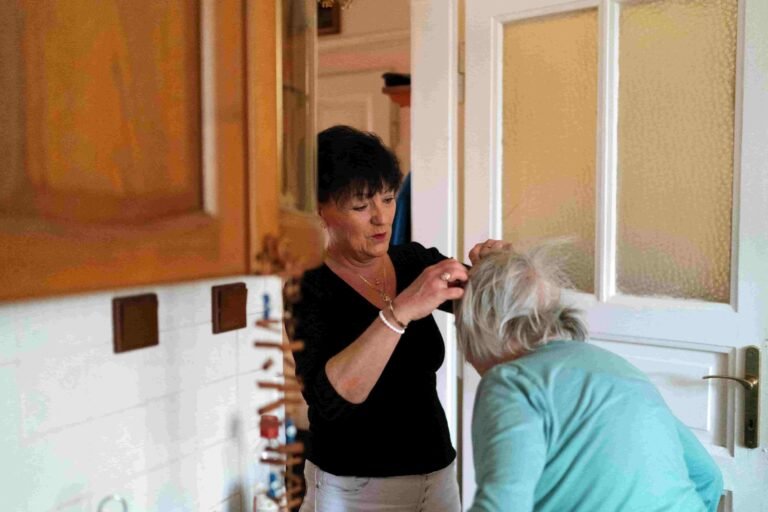

This question tends to arrive after something specific, like close-call fall or a visit that made it clear that your parent needs support. After the realization, your decision quickly splits into two paths.
In short, home care brings support to the person. Professional caregivers come to the home on a schedule the family sets, and daily life stays where it’s always been. Assisted living brings the person to support in a residential community with staff on site, meals and a built-in social life.
If your family has found itself at that fork, know that each path is good for different people and different situations. Arizona has a strong presence of home care agencies and excellent assisted living communities. The families who feel confident in their choice weighed their options honestly. They’re the ones who matched the choice to the person.
The table below unpacks what that difference means in practice, from daily life to costs, and the questions that clear the path to what’s right for your family.
Arizona Home Care vs. Assisted Living: Side-by-Side
| Home Care | Assisted Living | |
|---|---|---|
| What it is | Professional caregivers come to the home and provide services including companionship, meals, errands, transportation, personal care and medication reminders. | A residential community with on-site staff, prepared meals, scheduled activities and help with daily living. |
| Where life happens | The home, neighborhood and routines they already have. | A new residence, purpose-built for accessibility, community and support. |
| Attention | One-on-one: each visit is entirely about one person. | Shared: staff support many residents, with help available throughout the community. |
| Social life | Built deliberately: companionship visits, outings, family and neighbors. | Built in: shared meals, an activities calendar and neighbors down the hall. |
| Schedule | Your family sets it. Hours can range from a few hours per week to around-the-clock. | It’s structured. Consistent mealtimes, activities and around-the-clock staffing. |
| Cost structure | Hourly: you pay for the hours you use. | Monthly: a base rate covers housing, meals and a defined level of care. |
| Making changes | Adjust hours or tasks with a phone call to the agency. | Moving in or out is a substantial transition. |
| One sentence | Support comes to your life. | Life moves to your support. |
What does home care do well?
Comparing staying at home and moving typically isn’t a matter of logistics. For many older adults, their home is part of their well-being. They have the neighbor who waves and the grocery store they know like the back of their hand. Non-medical home care protects exactly that:
- Familiar surroundings stay intact. No moving or downsizing decisions, and no new floor plans to learn. Life continues where its habits live.
- Attention is one-on-one. A caregiver’s visit belongs to one person. It moves at their pace, in line with their preferences. With a consistent caregiver at each visit, that attention compounds into real familiarity.
- The schedule follows needs. Bloom has no minimum hours, so in-home care in Scottsdale or Phoenix can be two mornings per week, every weekday, or around-the-clock. It can seamlessly scale in either direction as life changes.
- The person stays in charge. Care plans are built around what someone wants to keep doing themselves rather than around a facility’s existing framework.
What does assisted living do well?
Assisted living is the right call for many families, and the Valley has communities where residents thrive and enjoy their lives. It’s a strong option because:
- Community is built in. About 1 in 10 older adults report feelings of loneliness. Assisted living offers shared meals, activity calendars and neighbors down the hall. For someone whose main struggle at home is isolation, this can be transformative.
- Staff are on site around the clock. Help is steps away at 3pm and 3am alike, which can be a real source of peace of mind.
- The logistics of a household go away. Cooking, cleaning, maintenance and often transportation are handled by the facility, which frees energy for everything else and prevents many typical household mishaps.
- Costs are predictable. One standing monthly figure covers housing, meals and a defined level of care, which can be easier to budget than a variable schedule for some families.
Which costs more?
It depends almost entirely on hours.
Home care is billed hourly, so part-time support generally costs less per month than an assisted living residence. However, as hours climb toward extensive daily coverage, the totals converge.
Around-the-clock home care generally costs more than assisted living. Neither structure is “cheaper” in the abstract. The real question is what your situation requires.
When should a family consider assisted living?
Some situations point toward a community setting:
- When isolation is the central problem, and companionship visits, outings or family rhythms haven’t been enough to solve it.
- When the need for support is constant, and the home can’t reasonably be adapted to it.
- When your parent is drawn to community living. Some people light up around shared tables and full calendars.
Age, diagnosis or a single bad week aren’t on this list, because none of those factors solely dictate this choice.
When does staying home make more sense?
- When the home itself is healing. Familiarity, pets, a garden and a street full of known faces all provide infrastructure.
- When the need for care is part-time or intermittent. Paying for a residence to solve a ten-hours-per-week problem is a mismatch for both parties.
- When memory changes are part of the picture. Familiar surroundings and a consistent caregiver often reduce confusion in ways a new environment can’t.
Five questions that help Arizona families decide
- What does your loved one want? Start here. The person at the center of this decision should have the loudest voice in it, and a choice they help make is one they’ll prefer.
- What does a typical week really require? List the real needs, which can include rides, meals, medication reminders, company and/or personal care, and how many hours they honestly represent.
- What do the numbers look like for those hours? Run the hourly total against local community pricing for the same period. The comparison often looks different.
- Which choice is easier to adjust if you’re wrong? Home care adjusts with a conversation, in either direction. A move is a bigger commitment, though some Valley communities offer short respite stays, which can be a fair way to test that path too.
- Who else should weigh in? Your loved one’s doctor, family and honest professionals on both sides. A good agency or good community will be clear when they’re not the right fit. If you’re not sure what kinds of questions to ask home care agencies, we’ve written a comprehensive guide to walk you through preparing for and reflecting on these conversations.
FAQ
Is home care cheaper than assisted living?
Sometimes. Home care is billed hourly, so you pay only for the support you use. With extensive or around-the-clock coverage, assisted living’s monthly rate is generally the lower figure.
Can we try home care before committing?
Yes. Bloom has no minimum hours, so a trial can be as small as two mornings per week, with no penalties if your family later chooses differently. Many communities offer short respite stays for testing that option as well.
What's the difference between home care and home health care?
Home care is non-medical support with daily living, whereas home health care is physician-ordered medical care delivered at home. Families comparing home care and assisted living are often interested in that distinction too, and this guide covers it.
Every situation is different. Talk through yours with a local team that starts with your needs, not theirs.
or schedule a conversation at your convenience. Our team is here to support you whenever you’re ready.