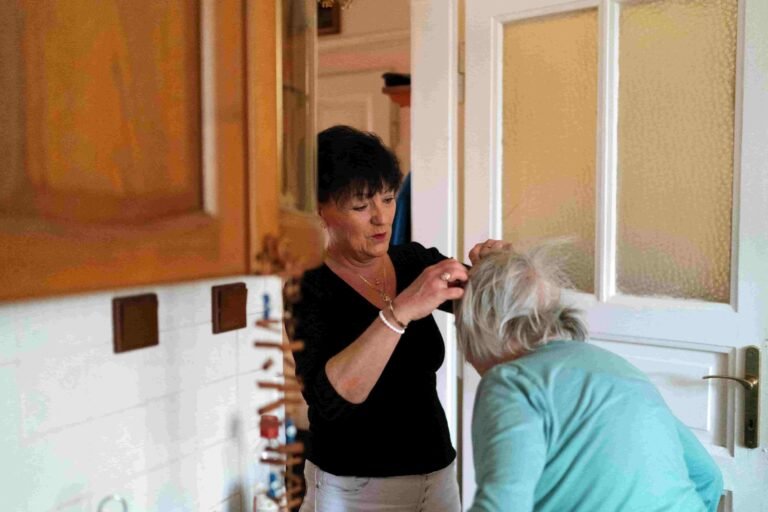

Watching someone you love struggle with everyday tasks is painful. Having a conversation about changes in their capabilities is uncomfortable. But ignoring the signs your loved one needs help can be catastrophic.
You might have noticed them starting to slip up with their bills. You might catch yourself holding your breath when they try to stand up or take the stairs. You might have noticed changes in their physical appearance or in the cleanliness of their home.
If you catch yourself feeling nervous now, imagine how you’d feel if something went wrong. While creating a plan can be uncomfortable, it provides peace of mind for all involved.
The good news is that you don’t have to make any life-altering decisions today. Having an eyes-on plan, even if it’s just a few days per week, prolongs the time your loved one can live at home independently.
By educating yourself on signs to watch out for, you’re already taking a step in the right direction. If you catch any of the following changes, acting early can help keep your loved one safe and independent.
1. Cognitive decline
The risk of Americans age 55+ developing Alzheimer’s jumped to 42% in 2025, suggesting that the number of new Alzheimer’s cases in America will double by 2060. And between 2000 and 2022, the number of deaths from Alzheimer’s disease as recorded on death certificates more than doubled, increasing by 142.4%.
As memory issues become increasingly common in the U.S., knowing the signs to look out for is imperative. Cognitive decline shows itself in many forms, some of which are discreet. Symptoms include (but are not limited to) difficulty making decisions, confusion, wandering, and memory loss.
2. Medication mismanagement
Nearly 7 in 10 adults aged 40-79 use at least one form of prescription medication, and about 1 in 5 use at least 5 prescription medications. Inconsistent medication schedules often cause more harm than good, and this can be a sign that your loved one needs some extra help.
3. Financial mismanagement
Often another symptom of cognitive decline, financial mismanagement includes forgetting to pay bills and bouncing checks. 80% of caregivers reported some level of financial mismanagement in families affected by cognitive decline. Although it’s an awkward conversation, financial mismanagement can be a sign of something bigger than simple forgetfulness.
4. Falls
The CDC estimates one in four people age 65+ fall each year, but less than half tell their doctor. And when there’s one fall, the chances of falling again double. Falls are the most common cause of traumatic brain injuries, and they are the leading cause of injury in adults age 65+. Whether your loved one has already fallen or you’ve noticed them start to struggle with mobility, falls pose a substantial risk to the aging population and shouldn’t be taken lightly.
5. Daily living struggles
Poor hygiene, nutrition, or home maintenance can also suggest that your loved one needs attentive care. They may be forgetting to complete these basic tasks, or they may be physically unable to.
6. Loneliness
The WHO estimates about a quarter of older people experience social isolation and loneliness. Your loved one could make jokes about being lonely, but you probably know that, deep down, there’s a bit of truth to it. Loneliness can intensify cognitive decline, reduce motivation, and increase susceptibility to depression, all of which impact your loved one’s ability to live independently.
There isn’t a one-size-fits-all solution when you notice a decline in your aging loved one’s wellbeing. For some it might be assisted living, and for others it may be drop-ins from family or in-home caregivers.
At Bloom Concierge Home Care, we’ve lived in the Scottsdale area for over a decade. If you’re located in Arizona and need some guidance on what to do next, we’re more than happy to lend a helping hand — even if you don’t choose our services. Contact us today.
FAQ
My loved one needs some extra support. What are my options?
Many adult children (63 million, currently) become their family member’s caregiver. Other options include assisted living facilities, which focus more on help with daily living, and nursing homes, which provide medical assistance.
Seniors who want to stay in their home may prefer in-home care, where a paid professional travels to them to assist. In-home care can be medical or non-medical. Learn more about what non-medical in-home care looks like here.
My loved one needs help, but they aren't ready for a facility. What can I do?
If your loved one isn’t ready for a nursing home or assisted living facility, creating an eyes-on plan with family members, third party caregivers, or a combination of both can help your loved one remain safe and independent. For example, having someone check on them for a few hours each day to make sure their needs are met creates an early warning system that prevents one small mishap from snowballing. Contact us to learn about how in-home support can supplement your plan to keep your loved one safe.
I provide care for my loved one, but it's taking a toll on me. What do I do?
You may be experiencing caregiver burnout, which is the mental, physical, and emotional deterioration one experiences because of caregiving. You can learn more about caregiver burnout and access helpful resources here.